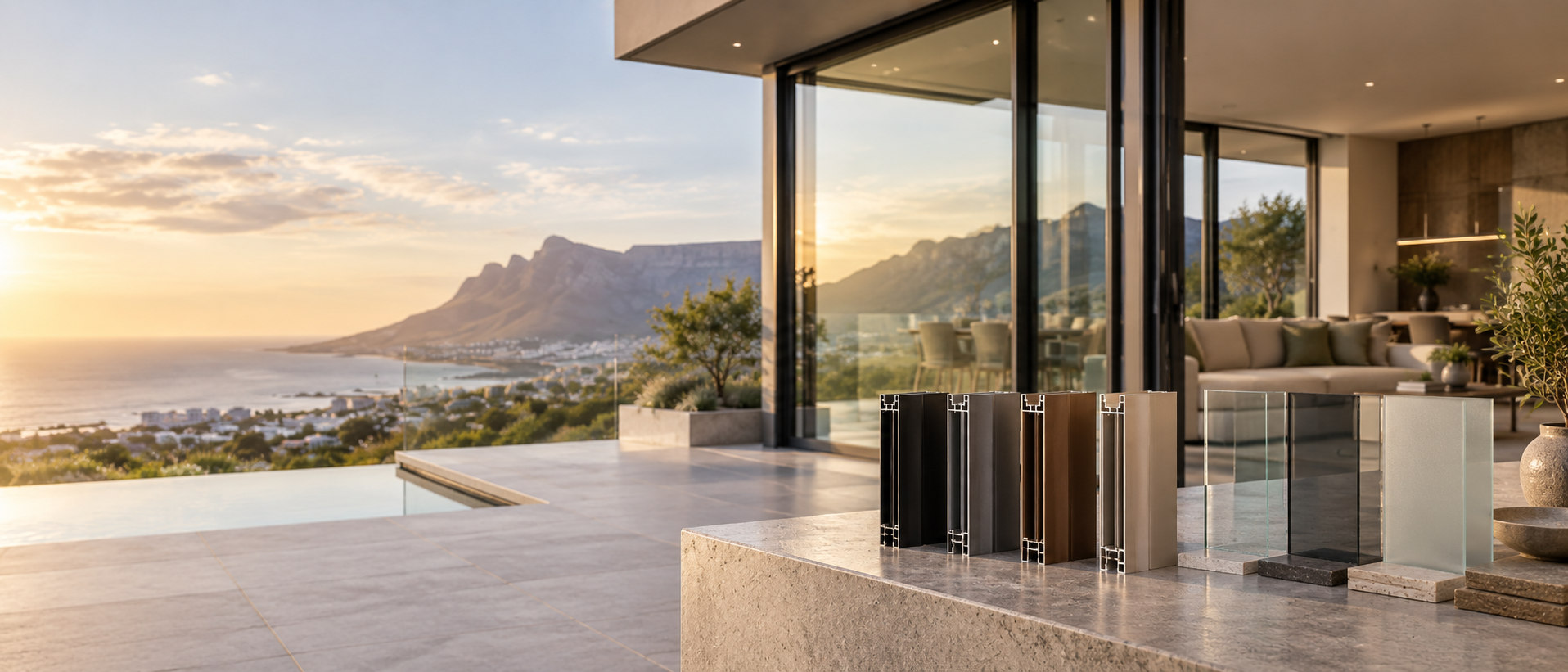
The right frame finish and glass can shape the appearance, natural light, privacy, glare and comfort of a space. Use this practical guide to compare the options commonly used by JCB and understand what to consider before making your choice.
Aluminium is particularly well suited to windows, doors, shopfronts and other architectural applications because it combines strength with relatively low weight and has good natural resistance to corrosion.
Architectural aluminium can also be powder coated or anodised, allowing the frame to become part of the overall design rather than simply serving as a structural component.
01
Durable
Well suited to long-term architectural use when correctly specified, manufactured and installed.
02
Corrosion Resistant
Aluminium naturally forms a protective oxide layer, making it particularly useful for exterior applications.
03
Strong Without Unnecessary Weight
Its strength-to-weight ratio makes aluminium practical for larger doors, windows and glazed openings.
04
Low Maintenance
Aluminium does not require the regular painting associated with many traditional frame materials.
05
Versatile
It can be manufactured into a wide variety of window, door and architectural systems.
06
Wide Choice of Finishes
Powder coating allows the frame colour to be coordinated with the property.
FRAME FINISHES
Choose Your Aluminium Finish
The colour of the aluminium changes the visual character of the installation, but colour alone does not determine the quality or durability of the coating.
The coating specification, preparation and environmental conditions are more important to long-term performance.
What does it look like?
Black creates a strong, defined frame around the glass and makes the aluminium a deliberate architectural feature.
Best suited to
Modern and contemporary properties, large glazed openings, entertainment areas and buildings using neutral palettes such as white, grey, concrete or natural stone.
Choose black when
You want the lines of the doors or windows to form part of the design rather than visually disappear into the building.
Advantages
Strong architectural contrast
Works particularly well with large areas of glass
Complements modern interiors and exteriors
Pairs easily with a wide variety of glass colours
Works well alongside black architectural hardware and fittings
Consider
Black creates more visual contrast than lighter finishes. On a traditional or very light property, this can become a dominant design feature.
Charcoal provides a dark contemporary appearance but is slightly softer than pure black.
Best suited to
Modern homes, properties using grey roofing or stone, commercial buildings and designs where a darker frame is wanted without the stronger contrast of black.
Choose charcoal when
You want a contemporary dark frame that blends more subtly into surrounding grey, stone or neutral finishes.
Advantages
Contemporary appearance
Softer contrast than black
Works well with grey and natural material palettes
Complements tinted and reflective glass particularly well
Suitable for both residential and commercial designs
Consider
Black and charcoal can appear similar when viewed individually. Where colour matching with existing frames, roofing or architectural elements is important, physical samples should be compared before making the final decision.
White creates a lighter, cleaner frame and tends to integrate naturally with light-coloured walls and interiors.
Best suited to
Light architectural palettes, traditional homes, properties using white exterior finishes and areas where the frame should appear visually lighter.
Choose white when
You want the aluminium to integrate with white walls, ceilings or other light architectural elements instead of creating a strong dark outline.
Advantages
Clean and neutral appearance
Works well with contemporary and traditional architecture
Integrates easily with light walls
Keeps the visual emphasis on the glass rather than the frame
Works particularly well where a bright, open appearance is desired
Consider
White creates a very different visual result from black or charcoal, particularly on larger openings. Consider the colour of roofing, gutters, doors and surrounding finishes before selecting it.
Glass should not be selected on appearance alone. Different glazing options can influence visibility, privacy, natural light, glare, solar heat, UV transmission, energy performance and safety.
There are two different questions to consider: How should the glass look and perform? And what type of safety glass is required for the application? JCB can help determine the appropriate combination for the project.
APPEARANCE & PERFORMANCE
Choose the Glass for the Space
Compare clear, privacy, tinted, reflective and thermal-performance options. No one glass is best for every opening.
What is it?
Clear glass provides the most natural view through the opening and allows high levels of visible light into the space. For many doors and larger architectural openings, clear glass may be supplied as laminated safety glass depending on the application and required specification.
Best suited to
Areas where visibility and natural light are the main priorities.
Choose clear glass when
You want an uninterrupted visual connection between indoor and outdoor areas.
Advantages
Maximum visual openness
High natural-light transmission
Neutral appearance
Works with every aluminium colour
Ideal where the surrounding view is important
Consider
Clear glazing offers little visual privacy. Where solar exposure, privacy or glare are major concerns, another glazing option may be more appropriate.
Arctic glass is a privacy-focused glazing option designed to diffuse light while restricting clear through-vision. It allows a room to retain natural light without the openness of clear glass.
Best suited to
Bathrooms and areas where privacy is important.
Choose Arctic when
You want daylight to enter the room but do not want a clear view through the glass.
Advantages
High level of privacy
Allows diffused natural light
Clean neutral appearance
Particularly practical for bathroom glazing
Can be incorporated into laminated safety-glass products
Consider
Arctic is intended to obscure the view. It should therefore not be used where seeing clearly through the window or door is important.
Cool Grey is tinted glazing that introduces a subtle grey appearance while helping control light and solar glare. Unlike highly reflective glazing, tinted glass generally retains a more understated exterior appearance.
Best suited to
Modern homes, larger glazed openings and buildings where a darker glass appearance is desired without strong reflectivity.
Choose cool grey when
You want to reduce the brightness and glare associated with clear glazing while maintaining a contemporary neutral colour.
Advantages
Contemporary grey appearance
Helps reduce glare
Offers a degree of solar control
Low reflectivity compared with reflective glass
Pairs particularly well with black and charcoal aluminium
Consider
Tinting reduces the amount of visible light passing through the glass. The exact performance varies according to the specific glass construction and product selected.
S10 Silver is reflective glazing designed to provide stronger solar and glare control than conventional clear or lightly tinted glass. Its reflective surface also creates a distinctive architectural appearance.
Best suited to
Sun-exposed windows, commercial façades and larger glazed areas where solar control and glare reduction are priorities.
Choose s10 silver when
You want reflective architectural glass and stronger solar-control performance.
Advantages
Strong solar-control characteristics
Good glare control
Distinctive reflective appearance
Helps reduce unwanted solar heat entering through glazing
Particularly effective as an architectural feature
Consider
Reflective glass changes the appearance of a building substantially. The reflective effect also changes according to the lighting conditions inside and outside. It is not guaranteed permanent one-way glass.
Low-E means low emissivity. Low-E glass uses a specialised coating designed to reduce heat transfer through the glazing. Depending on the exact Low-E product and glazing configuration, it can help improve the thermal performance of windows and doors.
Best suited to
Buildings where indoor temperature control and energy performance are important considerations.
Choose Low-E when
You have larger glazed areas or want to improve the thermal performance of the building envelope.
Advantages
Reduces heat transfer through glazing
Can help retain indoor heat during colder conditions
Can help reduce unwanted external heat during warmer conditions when appropriately specified
Available in glazing systems designed to retain a relatively clear appearance
Particularly effective as part of an appropriately specified energy-efficient glazing system
Consider
Not all Low-E glass performs identically. Performance depends on the specific coating, glass construction, frame system, orientation and whether the installation uses single or double glazing. JCB should assess the application before recommending a particular Low-E specification.
The colour or appearance of glass does not determine whether it is suitable for a particular application.
South African building requirements require appropriate safety glazing in various higher-risk locations. The correct glass type and thickness therefore need to be selected according to the installation rather than appearance alone.
What is it?
Laminated glass consists of glass layers bonded together using an interlayer. When laminated glass breaks, the interlayer helps hold the broken pieces together instead of allowing them to fall freely from the opening.
Advantages
Helps reduce the risk of injury after breakage
Broken glass tends to remain held together
Provides additional resistance to penetration compared with ordinary annealed glass
The interlayer can also contribute to UV filtering
Available in clear, tinted, privacy and performance-glass configurations
Toughened glass undergoes a heat-treatment process that increases its strength. If it breaks, it is designed to fragment into relatively small pieces rather than the large sharp shards associated with ordinary annealed glass.
Advantages
Greater resistance to impact than ordinary annealed glass
Suitable for many frameless applications
Improved resistance to thermal stress
Particularly useful where structural strength is important
Important: Toughened and laminated glass are not interchangeable in every application. The correct specification depends on the size, support, position and intended use of the glazing.
A PRACTICAL STARTING POINT
How Do I Choose?
Use these questions to shape the brief. JCB can confirm the final specification for your opening.
01
How much privacy do you need?
Maximum view: Clear. Privacy: Arctic. Some visual reduction: Tinted glass.
02
Is the opening exposed to significant sun?
Consider Cool Grey, Cool Bronze, S10 Silver, S10 Grey or Low-E. The right option depends on whether your priority is appearance, glare, solar heat or thermal performance.
03
What visual style are you trying to achieve?
Strong contemporary contrast: Black + Clear / Grey. Softer contemporary: Charcoal + Grey. Light and neutral: White + Clear / Arctic. Warm architectural palette: Bronze + Clear / Cool Bronze.
04
Does the application require safety glazing?
Doors, showers, balustrades and other higher-risk areas may require specific laminated or toughened safety-glass construction. JCB will confirm the appropriate option when assessing the project.
Still Not Sure?
Let Us Help You Choose
You don't need to know the exact aluminium system, glass type or finish before requesting a quotation.
Tell us what you are trying to achieve, where the installation will be located and what is most important to you — appearance, privacy, natural light, solar control or thermal performance.
JCB can then recommend suitable options for your project.